You signed in with another tab or window. Reload to refresh your session.You signed out in another tab or window. Reload to refresh your session.You switched accounts on another tab or window. Reload to refresh your session.Dismiss alert
Hello! Thank you very much for your work with PyGRDECL. I and my colleague have tried to use PyGRDECL for converting unstructured grid (fig.1) and we encountered some difficulties.
I would appreciate it if you could find time to look through it. I'll describe the problem with a simple example. We have this small grid for example.
There are actually 8 cells, not 6. Two of these cells are inactive. We exported ACTNUM data but it turned out this keyword is unsupported.
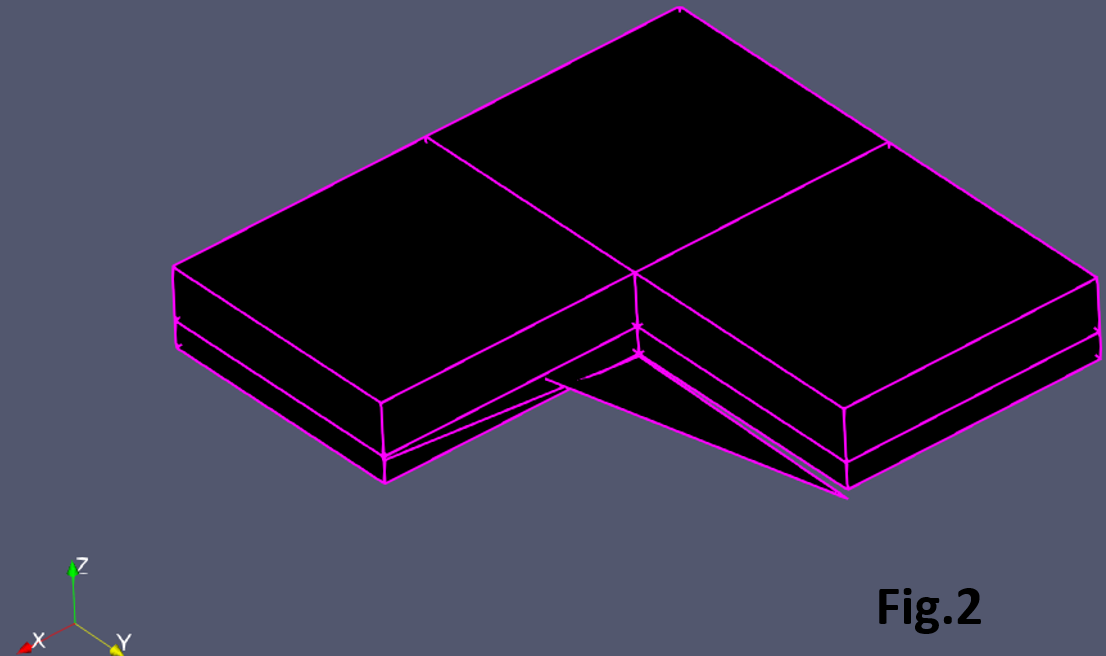
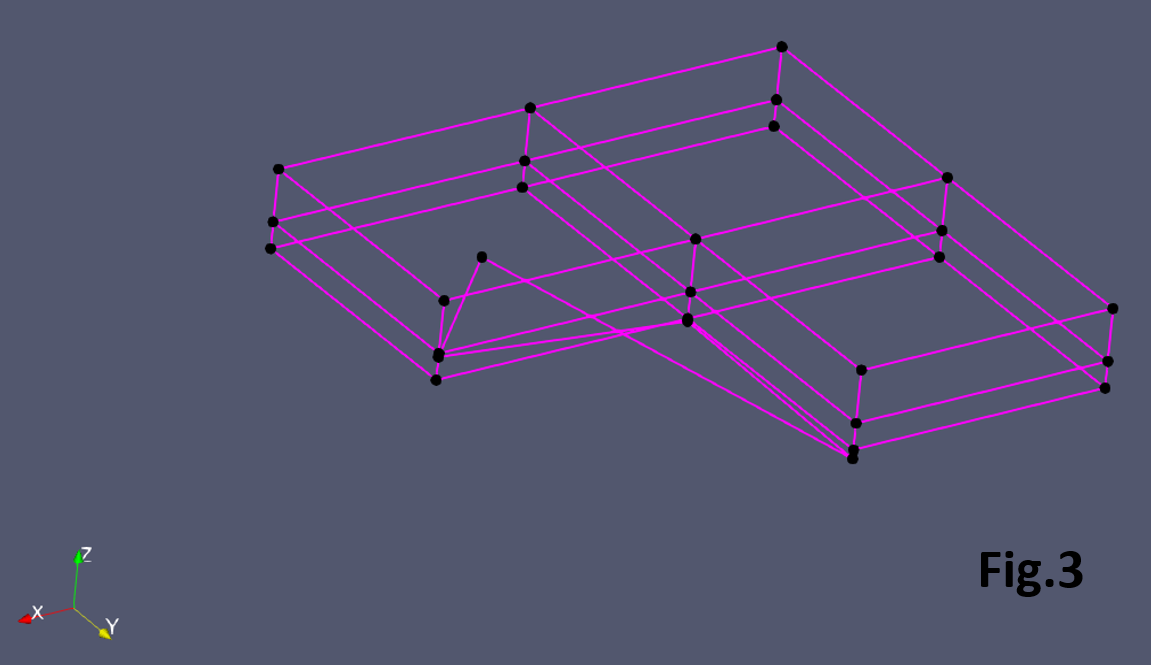
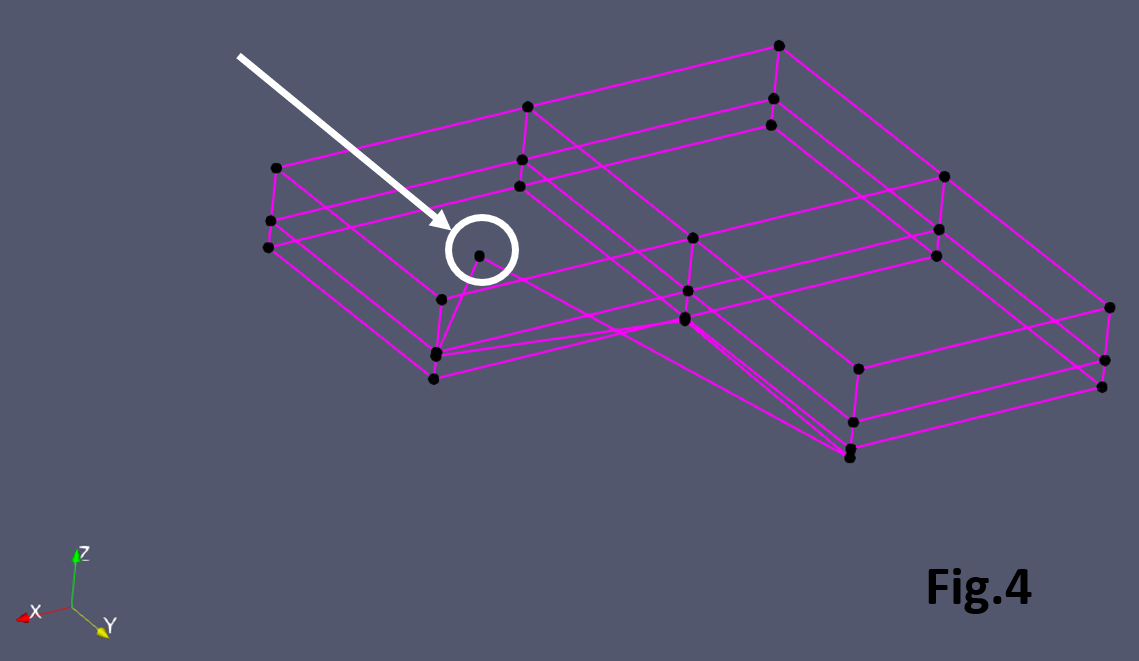
We converted the grid from fig.1 with PyGRDECL to VTU format. And we used ParaView for visualization. Here is what we've got.
In fig.3&4 you can see one additional point and it seems to me that it was generated by PyGRDECL.
Here are GRDECL file and VTU file.

Hello! Thank you very much for your work with PyGRDECL. I and my colleague have tried to use PyGRDECL for converting unstructured grid (fig.1) and we encountered some difficulties.
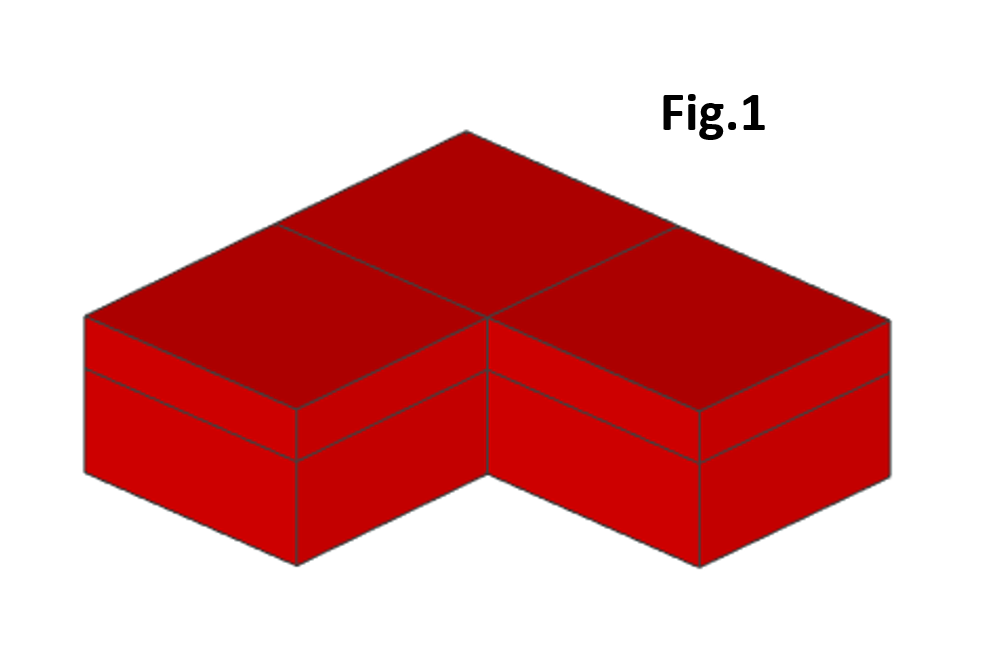
I would appreciate it if you could find time to look through it. I'll describe the problem with a simple example. We have this small grid for example.
There are actually 8 cells, not 6. Two of these cells are inactive. We exported ACTNUM data but it turned out this keyword is unsupported.
We converted the grid from fig.1 with PyGRDECL to VTU format. And we used ParaView for visualization. Here is what we've got.
In fig.3&4 you can see one additional point and it seems to me that it was generated by PyGRDECL.
Here are GRDECL file and VTU file.