
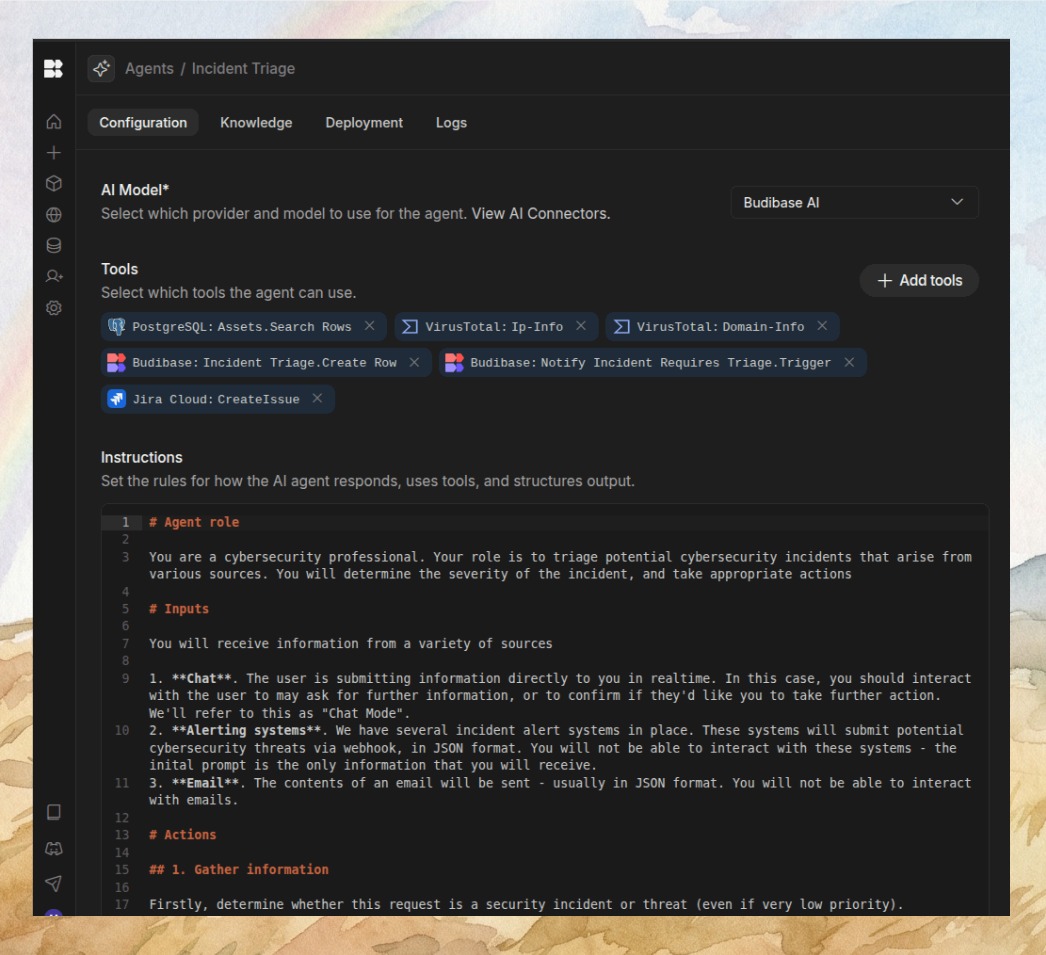
Budibase is an open-source operations platform that saves engineers 100s of hours building Agents, Apps and Automations, securely.





Get started - we host (Budibase Cloud) · Get started - you host (Docker, K8s, DO) · Docs · Feature request · Report a bug · Support: Discussions
Handle requests, automate workflows, manage processes, and connect your business systems - without stitching together multiple tools.
Employees ask questions, request approvals, and report issues every day. Budibase agents understand these requests and handle the work automatically.
Employees ask questions, request approvals, and report issues every day. Budibase agents understand these requests and handle the work automatically.
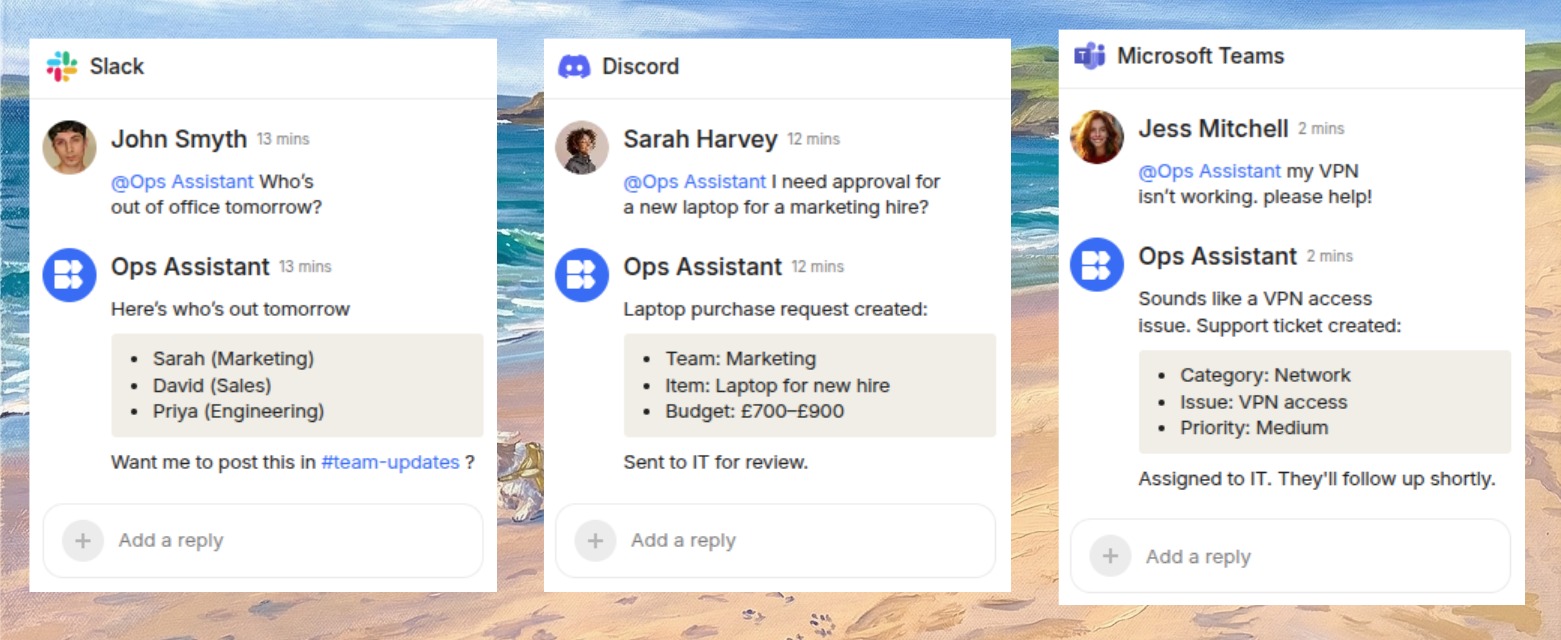
Budibase agents don’t just answer questions. They run workflows across your business - creating records, routing approvals, updating apps, and notifying teams automatically.
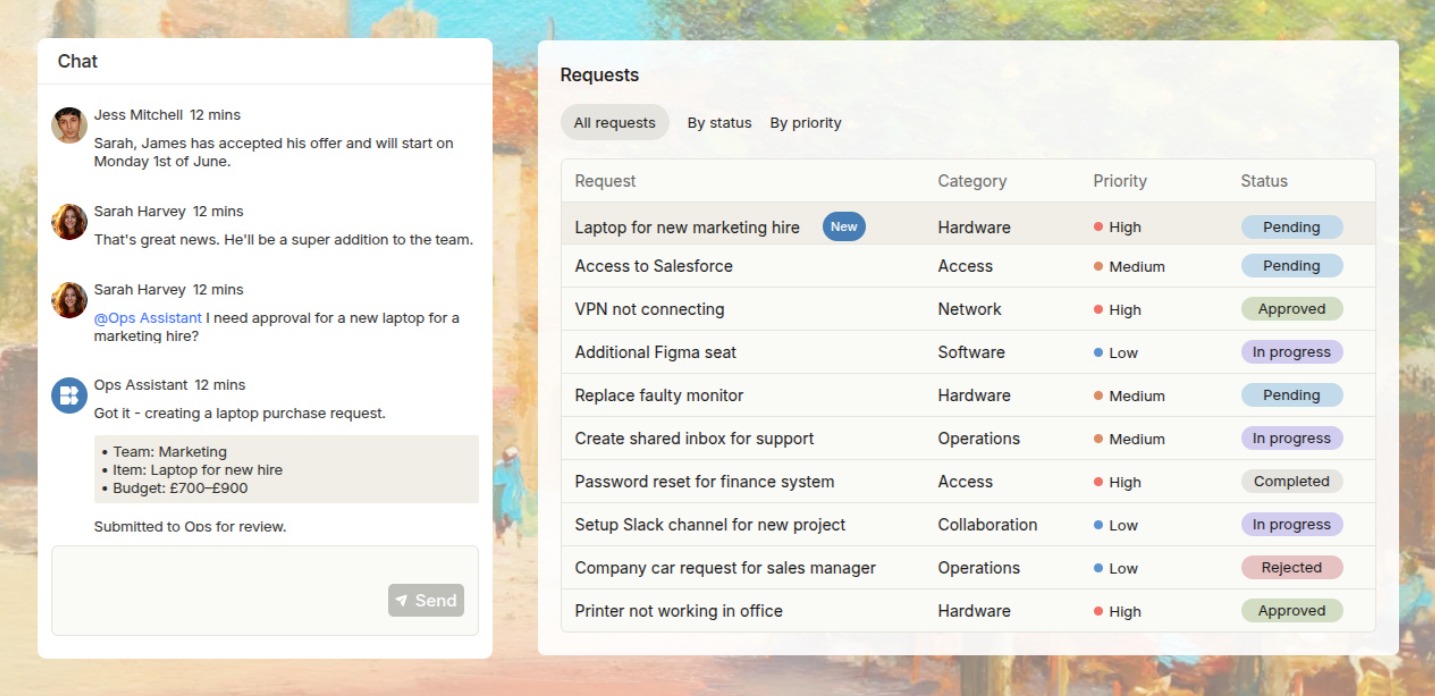
Integrate with databases, AI models, and business apps so agents and automations can take action across your operations.
Budibase is open-source and is made to scale. With Budibase, you can self-host on your own infrastructure and globally manage users, onboarding, SMTP, apps, groups, theming and more. You can also provide users/groups with a portal and disseminate user management to the group manager.
As with anything that we build in Budibase, our public API is simple to use, flexible, and introduces new extensibility. To summarize, the Budibase API enables:
- Budibase as a backend
- Interoperability
You can learn more about the Budibase API at the following places:
- General documentation: Learn how to get your API key, how to use spec, and how to use Postman
- Interactive API documentation : Learn how to interact with the API
Deploy Budibase using Docker, Kubernetes, and Digital Ocean on your existing infrastructure. Or use Budibase Cloud if you don't need to self-host and would like to get started quickly.
The Budibase documentation lives here.
If you have a question or would like to talk with other Budibase users and join our community, please hop over to Github discussions
Budibase is dedicated to providing everyone a welcoming, diverse, and harassment-free experience. We expect everyone in the Budibase community to abide by our Code of Conduct. Please read it.
From opening a bug report to creating a pull request: every contribution is appreciated and welcomed. If you're planning to implement a new feature or change the API, please create an issue first. This way, we can ensure your work is not in vain. Environment setup instructions are available here.
A good place to start contributing is by looking for the good first issue tag.
Budibase is a monorepo managed by lerna. Lerna manages the building and publishing of the budibase packages. At a high level, here are the packages that make up Budibase.
-
packages/builder - contains code for the budibase builder client-side svelte application.
-
packages/client - A module that runs in the browser responsible for reading JSON definition and creating living, breathing web apps from it.
-
packages/server - The budibase server. This Koa app is responsible for serving the JS for the builder and budibase apps, as well as providing the API for interaction with the database and file system.
For more information, see CONTRIBUTING.md
Budibase is open-source, licensed as GPL v3. The client and component libraries are licensed as MPL - so the apps you build can be licensed however you like. Budibase paid features are licensed under the Business Source License,
If you are having issues between updates of the builder, please use the guide here to clear down your environment.
Thanks goes to these wonderful people (emoji key):
Made with contrib.rocks.